
Transforming lives
Growing futures
Insights from research conducted in 2023 by Dr Frances Harris on the longer-term impact of a week on the farm.
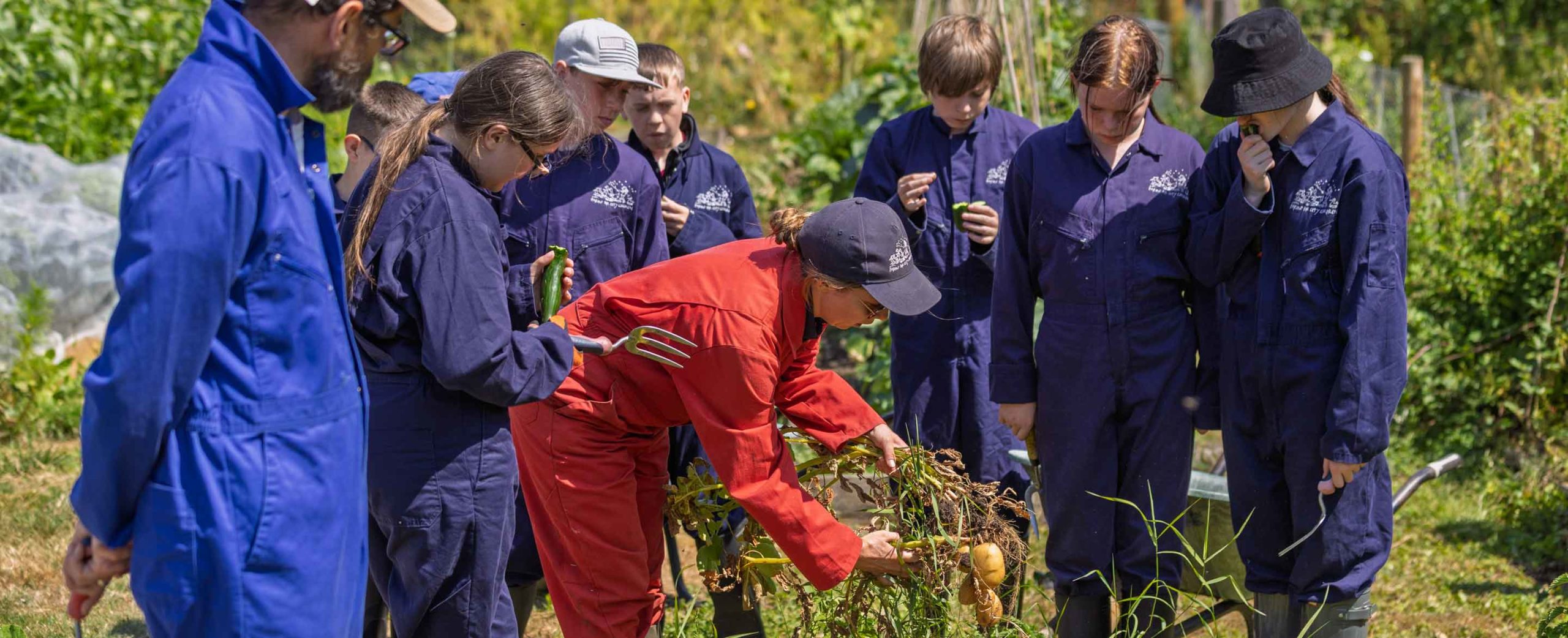
At Farms for City Children, we see the impact of a week on the farm unfurl in front of us. Children who arrive anxious gain confidence, those who were quiet are encouraged to find their voice and those who arrived unsure discover what they are capable of.
Research by Dr Frances Harris puts that lived experience into sharper focus and adds evidence and long-term perspective to what we see on our farms and hear from teachers: that the impact of a week with Farms for City Children can extend far beyond the farm gates.
By tracing the experiences of people who visited our farms as children, sometimes decades ago, the study explored what stays with them long after they leave. Using an online survey promoted through Facebook and Twitter, the research gathered reflections from former farm visitors on the lasting influence of their visit. From fostering a deeper connection with nature and a greater understanding of food and farming, to shaping career choices, where people choose to live and how they raise their own children, the findings suggest that, for some, a single week on the farm can become a significant life experience. Insights from this research are also helping us shape our wider plans for monitoring longer-term impact.
What stays with you after a week on the farm
Most educational trips are evaluated soon after they happen. What is much harder to understand is what impact remains years later.
The study combined eleven in-depth interviews with founders, farm staff, teachers, trustees and former chief executives with an online survey of adults who had stayed at one of our farms as children. Sixty six former farm visitors responded, representing thirty eight different schools and experiences spanning several decades.
This qualitative research included many open ended questions. Although this is a relatively small and self-selecting sample, the responses provided rich insights into the longer-term impact of a visit to the farm.
-
66 former farm visitors responded to the survey
-
38 different schools represented
-
11 in-depth interviews
-
Participants visited the farm from 1976 onwards
A week people still remember
-
94%
Remember feeding animals.
-
92%
Remember mucking out animals.
-
88%
Remember dormitory life.
-
86%
Remember cleaning the farmyard.
-
83%
Remember milking cows or goats.
-
71%
Remember free play with friends.
-
70%
Remember story time.
Learning through real responsibility
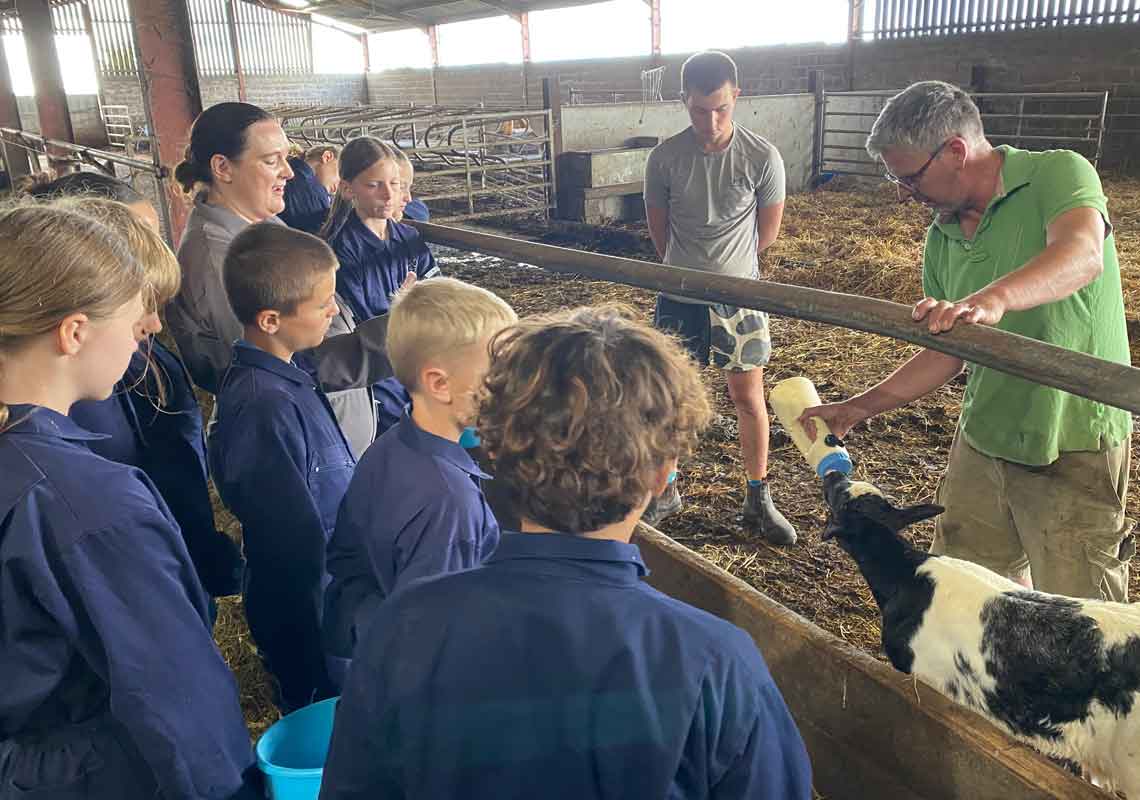
A central theme in the research is the value of farm work. Children are not simply shown what happens on a farm like a museum or petting zoo. They take part. They feed animals, muck out, prepare food, collect eggs and help complete jobs that genuinely need to be done.
The research describes how repeated tasks can help children move from unfamiliarity to competence and confidence over the course of a week. Something daunting on day one can become something they know how to do by the end.
Interviewees also highlighted perseverance, teamwork, responsibility, practical competence and the satisfaction of completing a task. For children who do not always thrive in a classroom setting, this can be particularly important.
Farm staff meet children without prior knowledge of their academic ability. Teachers sometimes reported that as a visit progressed that they are surprised by who flourished in the farm environment. Children who struggled in school found themselves succeeding, being praised and looked up to by their peers for skills that had not previously been visible.
Understanding food and farming
Farm education connects children to food production in a real-world setting. The research found that respondents remembered not just the animals and countryside, but the processes behind food and farming: animal care, lifecycles, milking, meat and egg production, planting seeds, growing, harvesting and preparing meals.
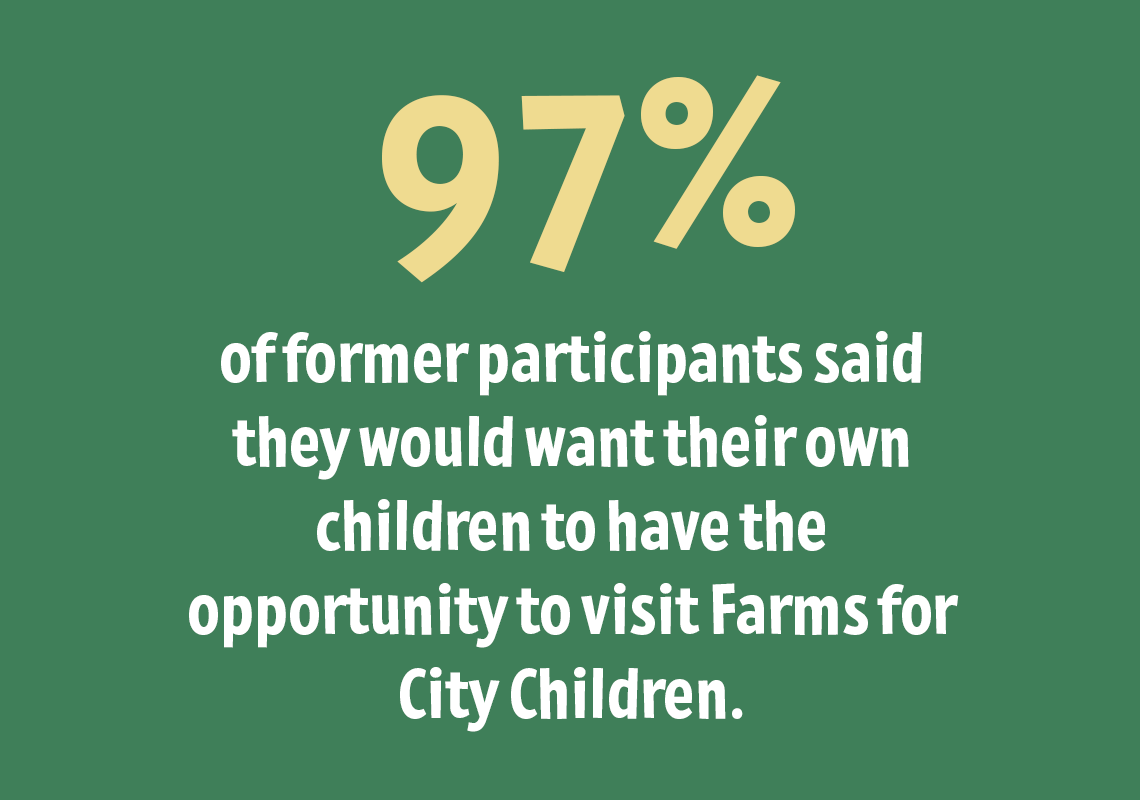
Taken together, the findings show that the longer-term impact of a week on the farm was not confined to one area. When former farm visitors were asked which effects had been most transformative their answers ranged from a deeper connection with nature and better understanding of food and farming to choices that shaped family life, work and where they lived.
Learning beyond the classroom
The research also identified strong links between a week on the farm and classroom learning.
Teachers and activity leaders described how the experience can support literacy, maths and science through real-world activity. New experiences and tasks expanded children’s vocabulary and gave them new and exciting things to write about. Cooking involves reading and following instructions. Measuring, weighing and counting make maths practical, while caring for animals and growing food brings science to life through lifecycles, food production and animal care.
Connection with nature that lasts
The longer-term findings in the research repeatedly refer to people’s connection with nature and the outdoors. When respondents were asked about the impact of their visit on later life choices, 26% referred to being outdoors, developing a love of nature or the countryside, feeling more connected to nature, or recognising its role in their wellbeing.
For some, this translated into choices about where they lived or what they did later in life. Seven respondents specifically mentioned moving to the countryside. Others described taking their own children outdoors or becoming involved in outdoor learning.
Widening horizons
One of the strongest themes in the interviews was widening horizons. For children from urban communities, a residential farm visit can introduce not just a different landscape, but a different way of life.
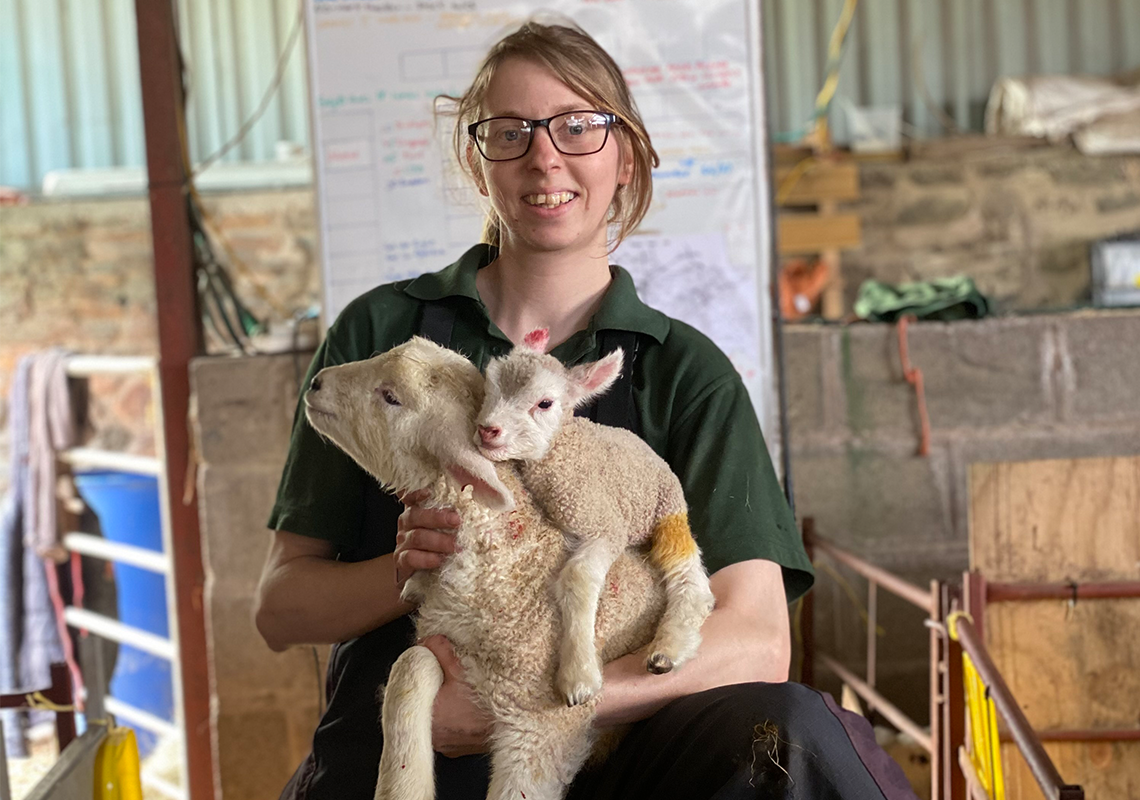
Interviewees described it as opening up possibilities children may never previously have considered. “I’m now a full-time shepherdess. What more is there to say! All because I stayed at Nethercott.”
For some respondents, those possibilities influenced what came next. They described careers involving animals and farming, including veterinary nursing, veterinary medicine, farming and shepherding. The intended impact is about possibility: giving children meaningful exposure to worlds they may not otherwise encounter and helping them imagine where they might fit within them.
Participant comments
“I felt welcome and wanted and appreciated, and useful for the first time in my life.”
“It was a long time ago and I do not see many of my friends from school days. However when I do, invariably our visit to the farm is part of the conversation, almost 50 years later.”
“It opens a possibility… It’s like opening up the lid on a world.”


Relationships, friendship and belonging
A residential week is also intensely social. Children live, eat, work and spend their free time together. There are no TVs, no computer games, no social media. Teachers see pupils in a different environment, while children discover different qualities in one another too. The research found that teamwork, shared tasks and common purpose helped relationships develop across the week.
20% of respondents mentioned friendship when reflecting on the immediate impact of their visit. One interviewee recalled a child being asked what she was most pleased about at the end of the week. “I’ve got friends” came the reply.
A place of safety
Some of the most powerful responses in the research came from people for whom the week had meant more than education or adventure. A small number described difficult childhood circumstances and remembered the farm as a place of safety and respite.
- “The only time I ever went outdoors as a child. It wasn’t safe to do that.”
- “Great memories of finally feeling safe.”
- “The visit was a temporary refuge from an unhappy childhood home.”
The study does not attempt to quantify this experience across all children. But these accounts show how significant a residential was for some young people.
Impact that reaches the next generation
Perhaps the most striking finding is that the impact did not always end with the people who originally visited. Some respondents described taking their own children outdoors, reading with them, working with young people in nature, becoming teachers or bringing their own pupils to Farms for City Children.
That intergenerational effect is one of the most compelling findings in the research. The experience did not simply remain a childhood memory. For some, it became part of how they later chose to parent, teach, work and spend time outdoors.
A significant life experience
As you can read on the University of Hertfordshire website, the research places these findings within a wider body of evidence on outdoor, experiential and residential learning. Researchers use the term “significant life experience” to describe an experience important enough to influence later choices, identity or the story someone tells about their life.
The findings suggest that a week with Farms for City Children became exactly that for some former farm visitors. Decades later, they were still describing ways in which the experience had shaped their relationship with nature, their life choices and what they wanted to pass on to their families.
That is the deeper impact of a week on the farm: not only what happens while children are here, or during the rest of the school year, but what they carry with them when they leave.
With sincere thanks to Dr Frances Harris, all those who completed the survey and those who were interviewed. Without their time and contribution, this study would not have been possible.
This research was undertaken in 2023 and is helping shape our wider plans for monitoring longer-term impact.
References and citations
Title: FARMS FOR CITY CHILDREN: TRANSFORMING LIVES, GROWING FUTURES
Citation: Harris, F. (2026). FARMS FOR CITY CHILDREN: TRANSFORMING LIVES, GROWING FUTURES. University of Hertfordshire.
DOI: https://doi.org/10.18745/PB.27500
Title: A Week That Lasted a Lifetime: The long-term impact of residential farm visits on children
Citation: Harris, F. (2026). A Week That Lasted a Lifetime The long-term impact of residential farm visits on children. University of Hertfordshire.
DOI: https://doi.org/10.18745/PB.27499