Spring is a brilliant time to get outside and start birdwatching. As temperatures rise and the days grow longer, many birds are busy returning from migration, building nests, singing to attract mates and feeding their young. There’s so much to look out for. We’ve put together some top tips to get you started.
Whether you’re lucky enough to have a garden, a balcony, a park nearby or just a window with a view, birdwatching is an activity that everyone can enjoy. It doesn’t need fancy gear, just curiosity and a bit of quiet attention.
Getting started with bird watching
You don’t need binoculars or a guidebook to start! Here’s how you can get the most out of birdwatching right at home:
- Set up a “bird spot”. Pick a favourite window, doorstep, garden corner or patch of sky – somewhere you can return to again and again.
- Be quiet and patient. Birds are easily startled. Try sitting still for a few minutes and listen before you look. Sometimes you’ll hear birds before you see them!
- Simple identification. Use your senses and start to notice small details e.g. you can look for size (tiny like a sparrow, large like a crow), colour patterns (striped, spotted, plain) and behaviour (hopping on the ground, perched in trees, bathing in puddles). Even noticing “a small brown bird” is the start of a birdwatcher’s journey! Check out the RSPB website for lots of useful tips on bird identification.
Follow-up activities
Once you’ve spent some time watching, here are some ways to keep the adventure going:
- Keep a bird diary. Use a notebook or some paper to record details such as what birds you’ve seen, what they were doing, the time of day you saw them and the weather conditions. This builds observational skills and makes patterns easier to spot over time.
- Create a bird spotting map. Draw a simple map and use a key to show where you saw birds in your garden, park or local area. This helps with spatial awareness and spotting patterns over time.
- Make a bird count chart. Turn sightings into data by recording the number of birds per species using tally marks or by recording them in a simple bar chart.
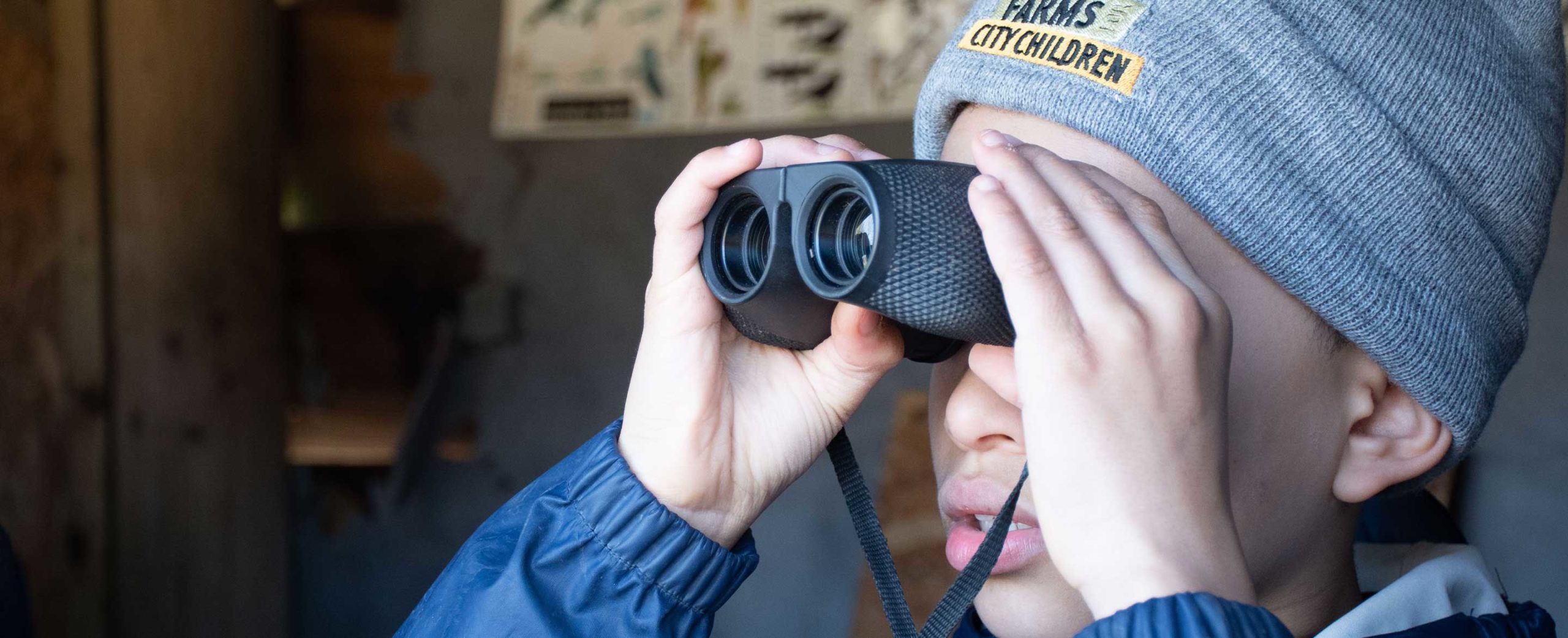
Birdwatching is a great way to slow down, listen and connect with nature right on your doorstep. It’s an activity enjoyed by all our visiting farmers, with young people at Lower Treginnis and Wick Court also able to spend time observing local wildlife from our bird hides. Find out more about the experiences we offer during a week on the farm in our Visit Us page.