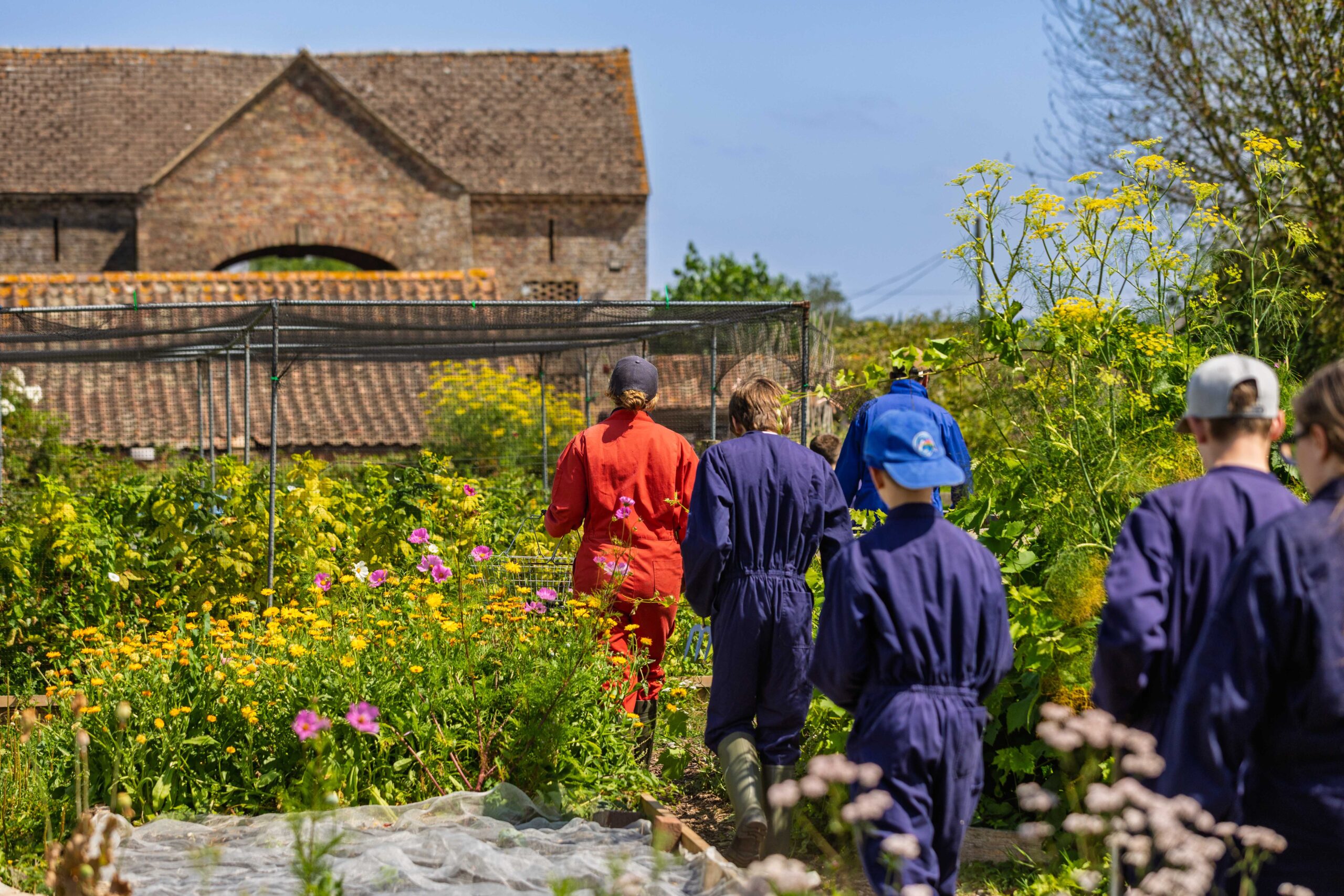
In our latest 50 voices, we chat to Nicola Doherty from Southmoor Academy in Sunderland. Nicola’s determination to bring children to Wick Court has involved everything from bake sales to marathon running.
With two visits down, a third already booked, Nicola tells inspiring stories about what a week on the farm can mean to the students she works with. One of her favourites involves a meadow and a handful of butterfly nets.
It was halfway through Southmoor Academy’s first visit to Wick Court when Nicola found herself watching a group of teenagers racing around a meadow, excitedly searching for butterflies and bugs. Some were children who rarely had the opportunity to leave Sunderland, others were more accustomed to spending their free time on their phones. Yet here they were, completely absorbed in what they might discover among the grasses and flowers.
As Nicola explains: “To watch them running about a field with sheer joy and excitement about catching butterflies and bugs. It was, that was the bit that got me and I thought, yeah, this is what it’s about.”
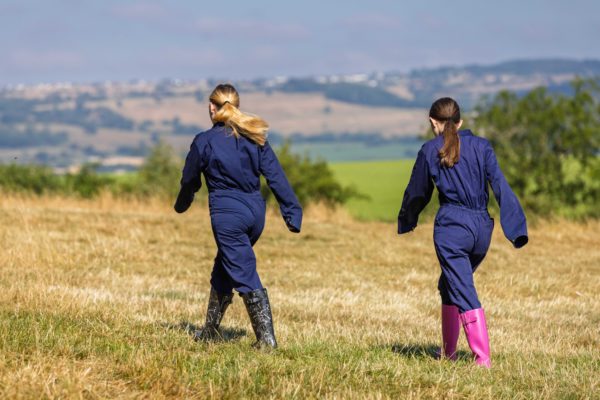
For Nicola, Child Welfare and Support Manager at Southmoor Academy, part of Aspire Trust, watching the children enjoy themselves so freely was a reminder of why she’d been determined to bring them to Wick Court in the first place.
A visit that planted an idea
Nicola first visited Wick Court during an Open Farm Sunday, encouraged by her sister, who works there. She hadn’t gone to Wick Court planning to organise a school trip, but what she saw meant that when she left, she felt she had to do just that.
As Nicola explains: “Once I was there, it was such a magical place. I just thought I have to bring our students, no matter what it takes. I didn’t know at that time how I was going to do it, but I knew that I had to get our students to have such that valuable experience.”
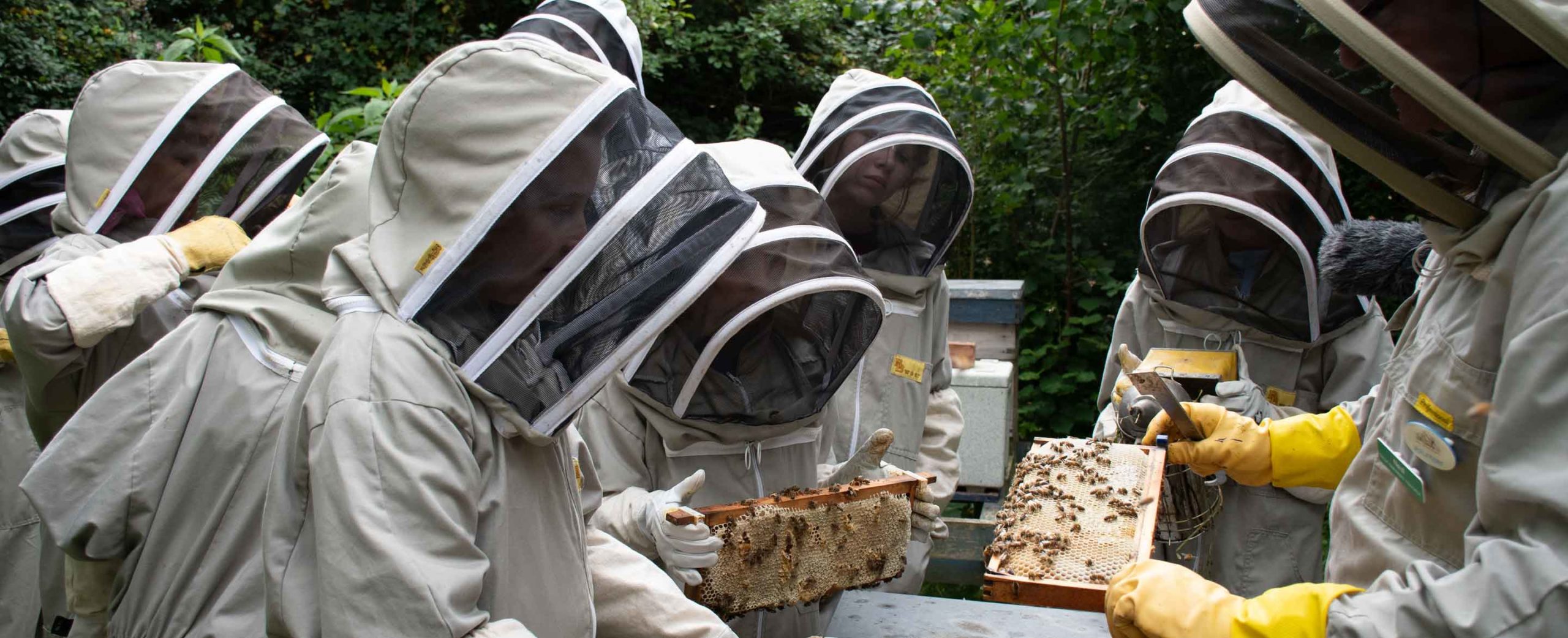
A conversation with beekeeping volunteer Ted proved particularly influential. As he described children putting on beekeeping suits and getting close to the hives, Nicola thought about the young people she worked with and how few would ever have that opportunity.
Southmoor Academy serves a diverse community, some pupils regularly travel and enjoy holidays, while others have rarely left the city. The school strives to give everyone the same opportunities
Finding a way, whatever it takes
Nicola took her idea to the school’s leadership team, making the case for bringing a group of children to Wick Court.
With Farms for City Children covering around 60% of the cost of the visit, Nicola and her colleagues then set about fundraising to cover the balance.
Bake sales, car washing, marathon running and selling sweets all helped keep the cost to parents as low as possible.
Each year, Nicola carefully selects around 30 children from across several year groups, choosing those she believes will gain most from the week. Some arrive not knowing anyone else in the group, while others find social situations challenging.
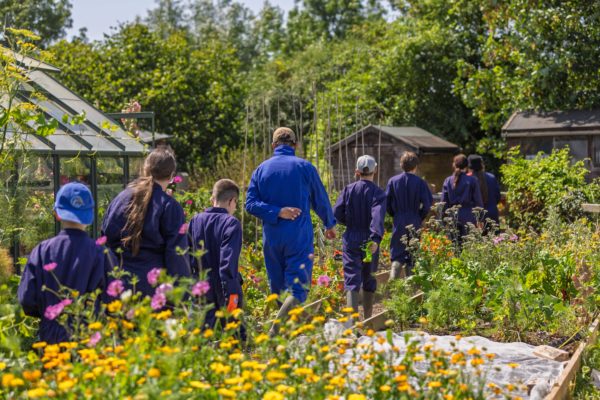
The mix of ages works well. Younger pupils often turn to older students rather than staff for help, giving the older children a sense of responsibility.
Whilst Farms for City Children is perhaps best known for welcoming primary school children through our gates the residential weeks are just as valuable for older children. With renewed attention on re-engaging Key Stage 3, Nicola’s experience shows how a week on the farm can give teenagers opportunities to learn, take on responsibility and discover interests beyond a classroom.
“Our students were experiencing new ideas and a way of learning far beyond what the classroom can offer” explains Nicola.
“I’m a natural beekeeper”
During the school’s second visit, Nicola found herself back at the beehives with Ted, whose enthusiasm had first sparked the idea of bringing her students to Wick Court.
One girl, who has communication difficulties and often holds back from new experiences, was frightened by the prospect of getting close to the bees. Nicola reassured her that she didn’t have to take part and that they could stand together and watch.
With Ted’s encouragement, she gradually joined in, first holding the smoker and eventually one of the frames from the hive. As she carefully returned the frame, Ted noticed how gently she handled it. “You’re an absolute natural. And I mean that.” Ted had commented.
As Nicola explains: “It’s all she tells people now, she says, ‘I’m a natural beekeeper. I’m a natural beekeeper. The bees love me.'”
For Nicola, the girl’s pride in discovering something she was good at says more about the experience than any school report could.
Taking the experience home
And sometimes, an interest sparked at Wick Court follows children all the way back to Sunderland. Nicola remembers a boy who phoned his mum excitedly on the journey home to ask if they could buy seeds so he could grow something himself.
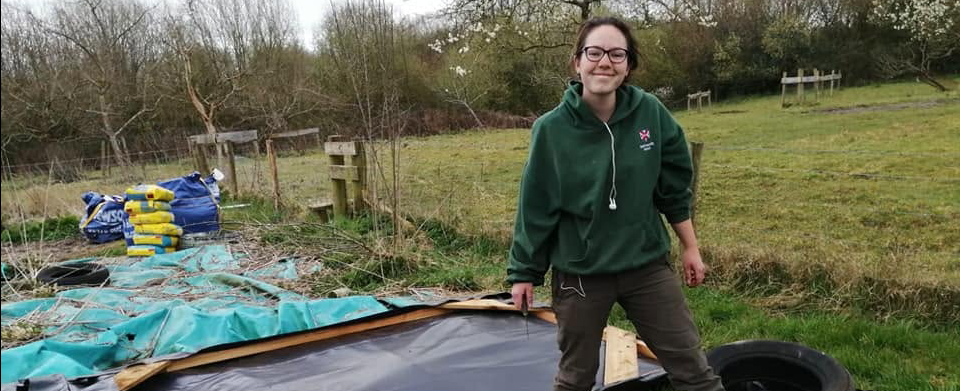
Unsure if the boy got to grow at home Nicola made sure that, when she returned to Wick Court the following year, she brought some back for him to plant, with the school’s conservation area offering somewhere to put his new interest into practice.
“Just tiny little things like that is massive to them. Big impact.” Reflects Nicola.
Long may it continue
After over 20 years working at Southmoor Academy, Nicola’s only regret is that she didn’t discover Farms for City Children sooner.
She’s now become something of a champion of the charity, telling colleagues in other schools about Wick Court and encouraging them to bring their pupils. She also wants staff to experience the farm for themselves.
With Farms for City Children celebrating its 50th anniversary, Nicola is keen to see more schools discover what she wishes she’d known about years ago.
As she explains: “It’s a long way for us to come, but it’s worth every single minute of blood, sweat and tears that we put into it. And long may it continue because, you know, every year so many children have been benefiting from it and getting these like golden experiences.”
Next year’s visit is already booked, and Nicola is preparing to choose another group of children. There will be more fundraising, of course, but also the prospect of another group of young people discovering the simple joy of running around a meadow with a butterfly net or wanting to plant seeds at home in Sunderland is motivation enough.
Are you a secondary school looking for new ways to inspire and engage your students?
Farms for City Children welcomes children and young people age between 8-19 to spend a week connecting with food, farming and nature on our farms. Find out how your school could benefit from a residential week at one of our three farms.