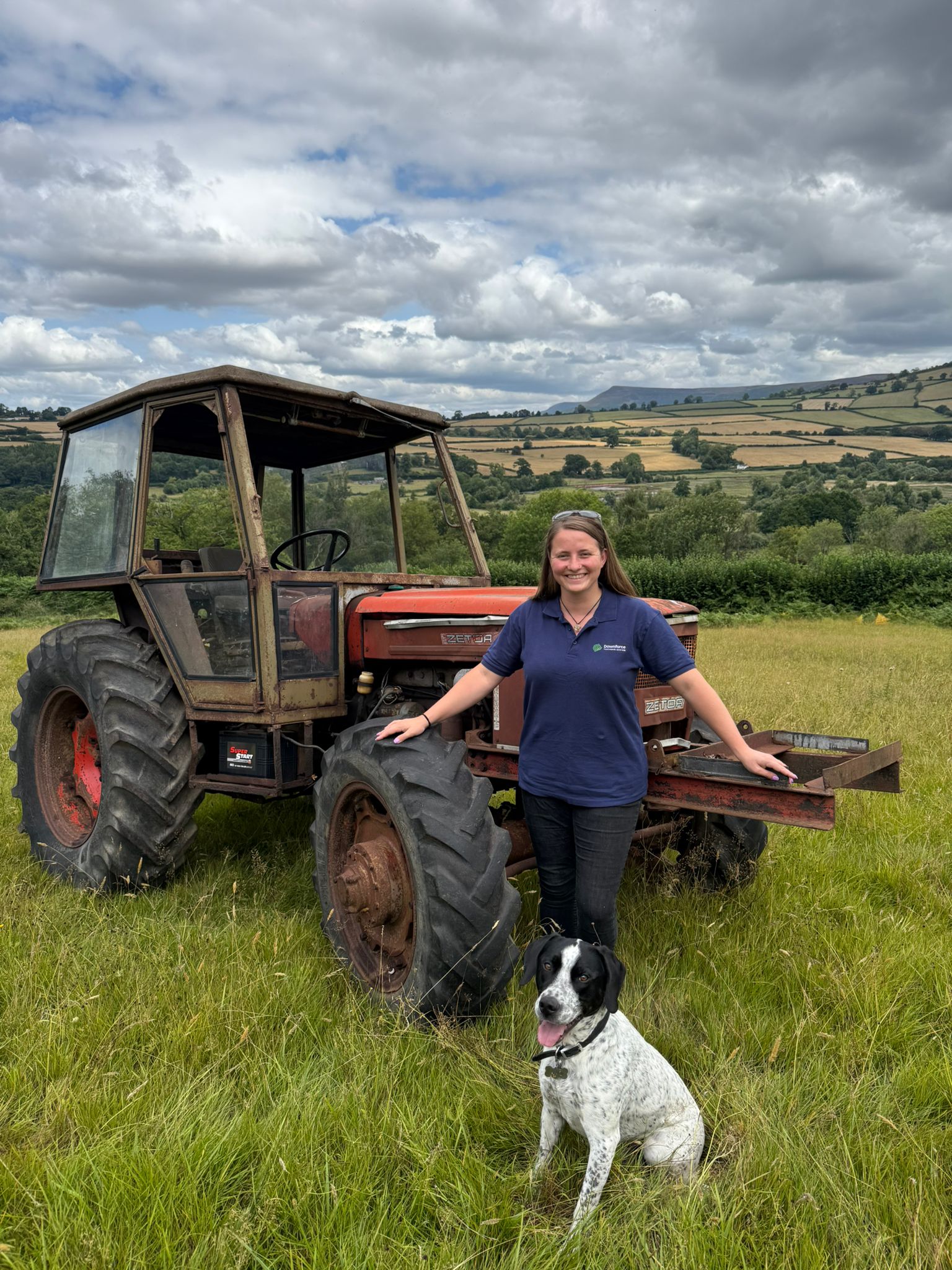
As someone who grew up in Croydon, Liz Tree might not be the first person you might think of as someone who was destined for a career in agriculture. But a chance childhood encounter in the Brecon Beacons changed that.
As part of our 50 voices stories, Liz reflects on her journey from that moment, the research she later carried out with children at Wick Court, and why she believes one experience on a farm can open the door to something much bigger.
How one encounter changed everything
“I grew up in Croydon, south London, with no family connection to farming. When I was around 13, I went on holiday with my family to the Brecon Beacons. As a bored city kid, I had no idea what rural life entailed, and very little understanding of agriculture and nature. I walked down to the local farm, who happened to be lambing, and asked to help. Every day of that holiday I went back and nearly every year since. With the farmer, Howard becoming a very close friend and mentor to me. I now live in that same village in Wales and am starting my own smallholding. That chance encounter as a young teenager sparked my passion for agriculture and has completely shaped the path of my life and career so far” says Liz.
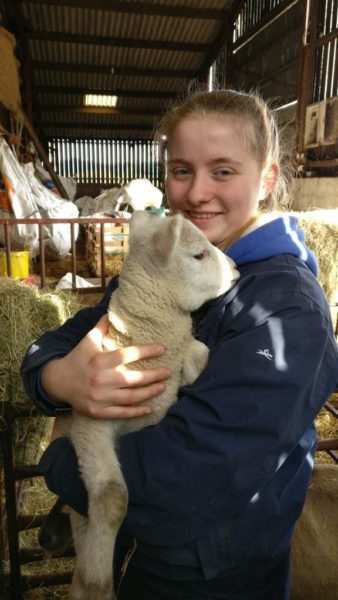
That holiday led Liz to seek out on-farm experiences on a variety of arable, horticultural and livestock farms. She went on to study for a BSc (Hons) in agriculture at Harper Adams University.
As Liz explains: “Getting young people interested in agriculture is something close to my heart, I want to show what a varied and viable career farming is.”
Today Liz works at Downforce Technologies, an agri-tech company using satellites and remote sensing to assess soil health, alongside running her own smallholding.
Researching the impact of a week at Wick Court
As part of her Master of Research in Agricultural Education at Harper Adams College, Liz worked with us at Farms for City Children on a piece of research about the impact of a week on the farm.
Compiled with Harper Adams Visiting Scholar Claire Toogood and generously supported by the Worshipful Company of Butchers. Liz worked with 43 children aged eight to 11 from four London primary schools, alongside nine teachers.
Researching the impact of a week at Wick
The children’s views were captured through a ‘rich picture’ process. They were asked to draw their responses to questions about what they had learned, how the farm had made them feel and whether they had been worried about anything before arriving. Their pictures then became the starting point for conversations in small groups.
For Liz, working directly with the children became a memorable part of the process too: “I rather unexpectedly loved working with children. I was a little apprehensive as I didn’t know what to expect, but I found it so entertaining and, at some times, quite moving.”
What the children shared
One of the most memorable ideas was something the children called ‘pigonomics’. As part of a week on the farm children weigh pigs and piglets and calculate their food. The farm activity gets them to think about percentages and calculations in a practical way. They were chatting to Liz about this and she highlights it as a practical example of how educational learning can suddenly be seen as having a clear real-life purpose and understood.
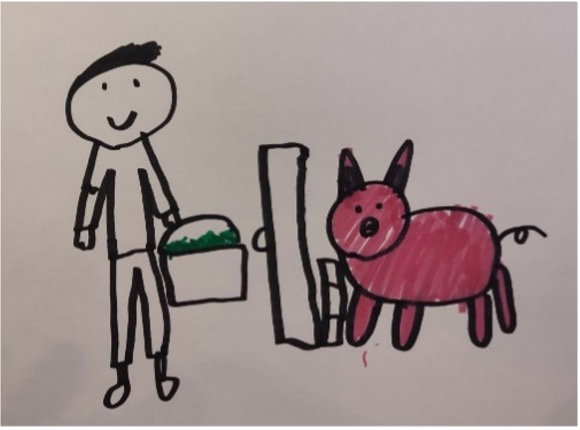
Liz explains: “One of the most memorable conversations was seeing how the children lit up when talking about how things they learned could be applicable to real life situations. Pigonomics is the perfect example and a revelation – to see children genuinely keen to work out weights and percentages because they could understand why.”
Learning on the farm goes further than maths. More than 70% of the children discussed animal production and welfare, with many showing detailed understanding of agricultural systems.
Growing in confidence
The research also captured changes that are less easy to quantify but just as relevant. Teamwork was the most common aspect of personal development mentioned. Children talked about learning to work together to complete farm tasks such as mucking out. Teachers spoke of children having greater patience, resilience and being understanding of each other.
For some children simply being away from home was a challenge. Others came nervous of unfamiliar animals, smells, mud or just being outside. But once on the farm many of those fears and concerns ebbed away and were replaced by confidence.
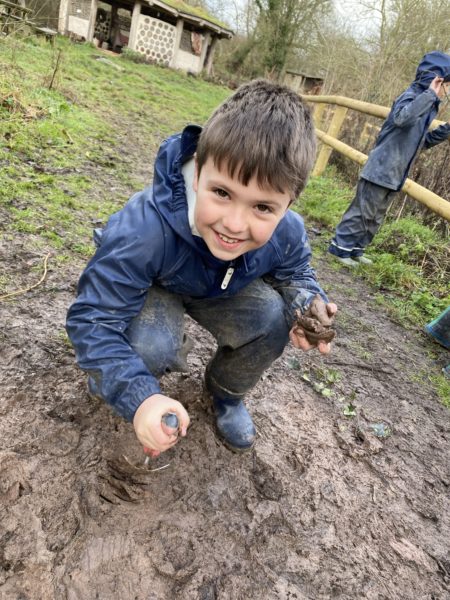
Children repeatedly described the week on the farm positively. Many shared, unprompted, that they were keen to return.
“The confidence that children gain by spending time on the farm and in nature cannot be underestimated.” says Liz.
Understanding food, farming and nature
The children also came away with a stronger understanding of where food comes from and what goes into producing it.
More than a quarter talked about cooking and food production, while some said the experience had encouraged them to try a wider range of foods. The research also showed greater understanding of the links between farming, animals and the food on their plates.
For one child, the experience travelled all the way home too. After growing food at Wick Court, they had started their own vegetable patch, planting tomatoes and planning to grow broccoli and salad. They also wanted to go back to Wick Court in the future.
As Liz says: “It’s so important that children have the opportunity to learn where their food comes from and what goes into producing healthy and nutritious meals.”
Far more than a week on the farm
One of the clearest things to see in the research is that the benefits of a week on the farm cannot be put in neat boxes. Learning built confidence. Teamwork led to improved wellbeing. Time outside gave a new understanding of and connection to nature. Practical jobs on the farm brought classroom learning to life.
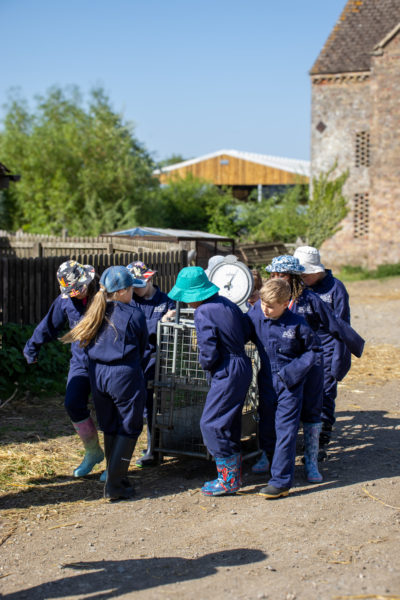
The report also identifies benefits including positive character development, emotional wellbeing and improved confidence.
For Liz the breadth of her findings reinforced her view on how much can happen during a residential week on a farm.
As she explains: “There are such a wide range of benefits shown in the research, not just the hard skills of calculations, food production or following instructions but children become more confident, more empathetic to themselves and the world around them.”
Why agriculture belongs in every child’s education
The research also raised a bigger question about how children learn about the people and systems that produce their food. One report recommendation was that farm visits should be encouraged through the National Curriculum, with additional support to make visits accessible to more children. Liz would like that ambition to go further.
Liz says: “I’d like to see both food production and agriculture on the National Curriculum. So children are better equipped to make informed food choices and understand where the food they eat comes from and the people and processes behind it.”
For Liz it is also about showing children that agriculture, in all its forms could be a part of their future, be it hands on farming or a career in research or farm technology. And that it can be a viable career regardless of where they grow up.
Opening a door
Liz knows from personal experience that you do not have to grow up on a farm to build a life or career in agriculture. Sometimes, you simply need the opportunity to discover that world exists.
As Liz explains; “I also like to hope that the children I visited in schools could see me as a kind of role model. Their weeklong visit to Wick Court could open the door to a career they would otherwise never know exists.”
Many of the children Liz met wanted to return to Wick Court, and some said they would consider a career in agriculture.
As she concludes: “Maybe one day I’ll end up working with one of them somewhere in my farming journey!”
For 50 years, Farms for City Children has been giving children the opportunity to step through the farm gates and discover something new. For Liz, that kind of encounter changed the direction of her life. With the help of our supporters, we can make sure more children get the chance to see where one week on the farm might lead. Read more about Liz’s research and the ways you can support us to achieve that impact.
*Liz Tree’s research was undertaken as part of a Master of Research in Agricultural Education at Harper Adams University, with Claire Toogood, and supported by the Worshipful Company of Butchers.